Hedge Trimming Wallington — Recycling and Sustainability
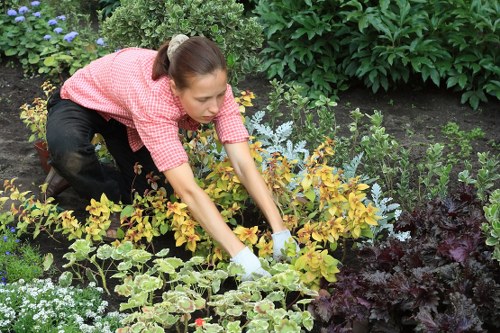 At Hedge Trimming Wallington we treat sustainability as a core service, not an afterthought. Our Wallington hedge trimming teams design every job with circular economy principles in mind: reduce waste at source, reuse where possible, and recycle the remainder. Whether you book hedge cutting, pruning or garden clearance, we plan for minimal landfill and maximal local benefit. We work with local borough approaches to waste separation and adapt our on-site sorting to match Sutton and neighbouring councils' streams for green, food and dry recycling.
Our measurable sustainability commitments are clear. We have set a recycling percentage target of 70% diversion of green and garden waste away from landfill within the next two years across all Wallington hedge and garden projects. That target covers chippings, branches, soil reuse and salvageable plant material. The target is monitored through job-by-job reporting and cross-referenced with transfer station receipts and partner charity intake logs to ensure transparency and progress.
 When we talk about low-impact waste handling we rely on municipal infrastructure as well as private facilities. We make regular use of local transfer stations and municipal depots serving the borough and nearby districts — coordinating with the borough transfer facilities that accept segregated green waste and wood for composting or biomass processing. Our teams are familiar with the boroughs' approach to waste separation and always separate green waste, food waste and dry recyclables where local rules apply.
Sustainable Rubbish and Gardening Area Practices
Every Wallington hedge trimming job creates an opportunity to build a sustainable rubbish gardening area. On-site segregation allows us to convert cuttings into useful outputs: chipped wood for mulch, composted green waste for soil improvement and live plant salvage for community projects. We maintain dedicated containment areas for different streams and use tarpaulins, crates and mesh bags to prevent contamination. Where safe and permitted, we leave woody debris on-site to form habitat piles that benefit urban wildlife rather than sending everything to a skip.
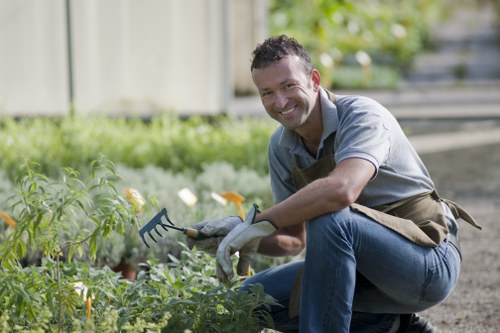 We also prioritise local re-use: intact shrubs, climbers, and planters are offered to community gardens and school greening projects, reducing the need for new plant purchases and supporting urban biodiversity. Through selective pruning techniques we reduce the volume of waste produced and extend the life of hedges through healthier regrowth. Our Wallington hedging services include soil screening and regrading so that good topsoil is retained and reused within the property or donated to local allotments.
We actively cultivate partnerships with charities and local community groups to extend the life of garden materials. Our collaborations include reuse charities, community garden groups, and wildlife trusts that accept healthy plants, growing media and tools. These partnerships turn what would be waste into resources for educational gardening, habitat restoration, and neighbourhood greening schemes.
Practical Recycling Activities and Partnerships
Our programme of recycling activity is practical and matched to local capability. Common tasks we perform for sustainable disposal include:
- Wood chippings processed into mulch or sent to municipal biomass/composting facilities;
- Green waste collection for council composting schemes or commercial anaerobic digestion where available;
- Soil screening and reuse on-site or delivery to community allotments;
- Separation of metals and plastics removed from garden waste for local recycling centers;
- Safe disposal of non-organic rubbish through authorised transfer stations.
These activities respect the boroughs' waste separation guidance and reduce cross-contamination. We document the destination of materials and work to make the most of local municipal services while also supporting smaller community-based reuse channels.
To lower transport emissions we operate a fleet of low-carbon vans for hedge trimming in Wallington and surrounding areas. Our vehicles include electric vans, plug-in hybrids and highly efficient diesel models that run on renewable or low-carbon fuels when electric charging is not yet practical. Route optimisation software and telematics are used to reduce mileage, limit idling, and cluster jobs so fewer trips are needed. These measures cut overall operational CO2 and reduce local noise and air pollution from garden maintenance work.
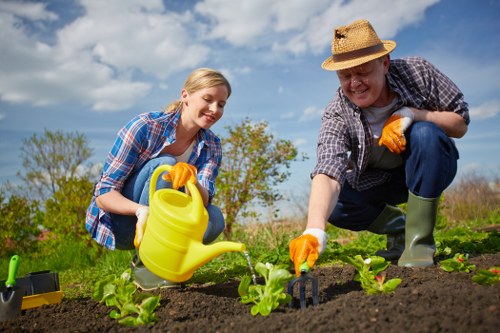 We complement low-emission vehicles with behaviour changes on site: smaller, quieter electric tools where suitable, consolidated loads to transfer stations, and bulk chipping on-site to avoid extra journeys. The combined effect of these steps is a meaningful reduction in the carbon intensity of our hedge and garden services.
 Monitoring and reporting are central to our sustainability approach. Each project generates a simple waste & reuse log showing volumes diverted to composting, amounts donated, and material sent to transfer stations. This documentation supports our recycling percentage target and helps refine processes. It also allows customers and community partners to see the environmental impact of hedge trimming in Wallington in tangible terms.
Our commitment to the environment goes beyond compliance. By combining clear recycling targets, collaboration with municipal transfer facilities, partnerships with charities and community groups, and investment in low-carbon vans, our Wallington hedge trimming services aim to set a local standard for sustainable garden waste management. We constantly seek to improve diversion rates and support the boroughs' move towards smarter, cleaner waste separation.
Whether you need routine hedge maintenance, seasonal clearance, or a one-off garden tidy, our approach ensures that waste is treated as a resource. We prioritise reuse, composting and recycling over landfill and make decisions based on local infrastructure, ecological benefit and carbon reduction.
Hedge Trimming Wallington is committed to making every cut count for the environment — reducing waste, supporting local charities, and using low-emission vehicles to keep our neighbourhoods greener and cleaner for everyone.