Hedge Trimming in Wallington

We provide hedge trimming in Wallington for homes and outdoor properties that need neat, controlled growth and a clear finish. The work can involve shaping formal boundaries, reducing overgrowth along paths and driveways, and keeping mixed planting tidy without stripping away the plant’s natural structure. Our focus is on practical hedge maintenance that leaves the line even, healthy-looking and suited to the space it frames.
If you are comparing options, it helps to think about the hedge itself rather than only the final cut. Evergreen screens, informal boundary hedges and dense ornamental varieties all respond differently. We trim to suit the plant, the season and the desired outline, whether the aim is a crisp top edge, improved light, or better access beside fences and garden features. For a broader view of the work we offer, see our services overview.
We also take account of the surrounding space so the result is useful as well as tidy. That can mean allowing enough clearance for gates and footpaths, keeping growth off windows, and managing the hedge line where it meets beds, lawns or hard landscaping. If you are ready to discuss the job, use the contact details on the site and request a quotation in plain terms.
Shaping and routine hedge care
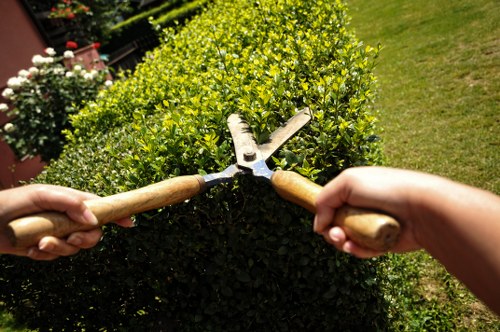
Regular trimming supports a consistent shape and helps prevent a hedge from becoming too heavy at the top or too wide at the base. We can work on established hedges that need routine maintenance as well as those that have gone beyond their usual line and now need more careful correction. The right approach depends on species, size, access and how much of the growth should remain in place.
Our trimming work is designed to be useful in everyday gardens, not only in showpiece settings. Some clients want a sharper finish for front boundaries, while others want a softer result that blends into surrounding planting. We can discuss the level of definition you prefer, from straight, clipped edges to a more relaxed outline. Where a hedge forms part of a wider outdoor project, the garden maintenance page gives a wider picture of supporting care.
Useful hedge-trimming choices often include the height of the top line, the amount taken from each side, how much widening to remove and whether a hedge needs one pass or a staged reduction. In some cases, it is better to improve the shape gradually so the plant keeps a balanced appearance. That is especially relevant for older hedges that have grown unevenly or have not been cut for a while.
Managing access, boundaries and finish

A well-trimmed hedge should work with the rest of the property, not fight against it. We pay attention to boundaries beside paving, fences, driveways and garden rooms so the cut looks clean where it meets built features. This matters when growth is close to entrances or when a hedge is helping to define an outdoor edge without taking over usable space.
Different hedges call for different handling. Dense evergreen growth may need careful cutting to keep a compact line, while mixed or lighter hedges often benefit from a more selective pass that preserves shape without creating a harsh finish. If a larger garden project is needed, our landscaping page shows the broader kind of outdoor work we support alongside routine trimming.
When a hedge has become awkward to reach, we consider the practical side of the job as part of the service. That includes access along side paths, working around planting beds and avoiding unnecessary disturbance to nearby surfaces. A good trim should leave the hedge looking deliberate, with fewer stray shoots and a better-defined outline that is easier to keep under control next time.
Reducing overgrowth without losing structure
Not every hedge needs a light tidy. Some have grown outwards, upwards or unevenly and need a more substantial reduction to restore proportion. In those cases, the aim is to improve the line while keeping enough foliage for the plant to recover well. The work may involve tidying the top, bringing back the sides or easing intrusive growth that affects paths, patios or light into the property.
We handle hedge trimming as a practical shaping service rather than a one-size-fits-all cut. That means recognising when a hedge can be brought back neatly in a single visit and when a more careful approach is sensible. If your hedge is also part of a general outside tidy-up, our garden clearance page may be useful for seeing how we deal with heavier garden waste and accumulated growth.
Before work begins, it is sensible to think about the result you want: a formal, crisp boundary, a softer screen, or simply a hedge that is back under control. Small details matter, such as whether the top should be level, whether both sides need equal attention and whether the hedge should be kept clear above a particular height. Clear instructions help us match the finish to the property.
Hedge trimming within wider garden care

Hedges often sit alongside lawns, borders and trees, so trimming them well is part of keeping the whole garden coherent. A hedge that is cut cleanly can make the rest of the space look more ordered, while an untidy edge can throw the balance off even if everything else is maintained. That is why we look at shape, scale and the hedge’s relationship to the rest of the garden before making each cut.
Where a hedge is part of regular outdoor care, you may also want to coordinate it with mowing, pruning or a seasonal tidy. Our lawn mowing page covers grass cutting work that often sits alongside hedge maintenance, especially when neat boundaries and clear edges are important. Keeping these jobs aligned can make the garden easier to manage through the season.
We can also support properties where hedges are one element in a larger planting layout. In those cases, trimming is not just about visual neatness; it can help preserve space for established planting, prevent paths from feeling narrow and make routine access simpler. Careful trimming is often the difference between a hedge that dominates the garden and one that frames it properly.
About Wallington

Wallington is a suburban district in the London Borough of Sutton, in South London, known for its residential streets, local shopping parades and easy links into the wider capital. The area developed significantly with the expansion of rail transport in the late nineteenth and early twentieth centuries, and much of its present character reflects that period of suburban growth. Detached and semi-detached housing, interwar streets and a network of smaller local roads give the district a settled, largely residential feel. Wallington town centre forms a focal point for everyday activity, with shops, services and stations serving surrounding neighbourhoods. The area also includes green spaces that contribute to its identity, including Beddington Park nearby, which is one of the larger open landscapes in the wider district and offers riverside walks, mature trees and historical interest. The River Wandle is an important local waterway in the broader area, shaping both the landscape and the history of settlement across South London. Civic and community life is supported by libraries, schools, churches and sports facilities, while the station connection keeps the area closely tied to central London and neighbouring towns. Wallington’s built environment combines post-war infill, older suburban housing and pockets of modern development, so its streets present a varied but recognisably residential character. That mix of homes, gardens and shared routes gives the district a clear local identity without the intensity of inner-city commercial centres.
Seasonal trimming and plant health
Hedge cutting is not only about appearance. The timing and style of trimming can affect how a hedge grows back, how dense it becomes and how well it keeps its line over time. Some hedges benefit from a light, frequent cut that maintains control, while others are better served by a more deliberate seasonal pass. We take the hedge’s type and condition into account so the work supports a healthy response, not just a tidy result.
In practice, seasonal trimming can help maintain a uniform screen, reduce the risk of stray growth becoming difficult to manage and keep the hedge from encroaching on neighbouring space. It can also make inspection easier, because a cleaner outline reveals weak areas, gaps or uneven sections more clearly. If you are weighing different kinds of outside work, the landscape gardening page explains how we approach broader garden improvement alongside maintenance tasks.
Good hedge care is usually about consistency. A hedge that is cut before it becomes unruly is often easier to maintain than one left to thicken unchecked. Even when a stronger reduction is needed, the best result still depends on measured cuts and a clear understanding of the plant’s shape. That is why we treat each hedge as a separate job rather than applying the same line to every boundary.
Planning a practical quotation
When you ask for a quotation, it helps to describe the hedge as plainly as possible. Useful details include approximate height and length, whether both sides are accessible, whether the hedge is formal or informal, and whether waste needs removing after the cut. Photos can help, but a written description is still valuable because it highlights what the camera may miss, such as uneven ground, narrow side access or nearby features that need care.
For some jobs, the main factor is simply the scale of the trimming. For others, the condition of the hedge matters more, especially if there are several levels of growth or previous cutting has left uneven edges. We will normally look at the overall shape, access and finish required before pricing the work. If you are comparing support services, the pricing and quotes page is a useful place to start.
Two details are especially useful: whether you want a light tidy or a more noticeable reduction, and whether you want the hedge to be shaped to a precise line. Those points help keep the quotation accurate and avoid confusion later. If you already know the result you want, say so clearly when you make contact. Request a quotation once you are ready, and we can take it from there.
Complementary outdoor services
Hedge trimming often sits within a wider set of garden tasks, especially where a boundary hedge, shrub planting and lawn edges all meet in the same area. In those situations, tidy hedge work can support a more orderly overall finish without requiring a full redesign of the garden. It is often sensible to think about what else needs attention at the same time, so the property is handled efficiently and consistently.
Where trees are affecting light or access, trimming alone may not solve the whole problem. In that case, a separate tree service may be more appropriate, especially if larger branches or overhanging growth are involved. Our tree lopping and removal page explains that kind of work, which is distinct from hedge maintenance and should be considered on its own merits.
Likewise, if a property needs broader outdoor improvements, our decking services page shows how hard landscaping can be planned alongside planting and boundary work. The goal is not to overload a single visit with unrelated tasks, but to make sure each part of the outside space is handled in a way that suits its materials and use.
Choose the right level of hedge care
Some customers need a simple refresh, while others want a hedge brought back into better proportion after a period without maintenance. The right choice depends on how the hedge is used, how visible it is from the house or street, and how much growth can be removed without affecting its structure. A formal hedge usually benefits from a more exact cut, while a softer screen may only need shaping and height control.
It is also sensible to think about what should happen after trimming. Some people only need the hedge itself cut back, while others prefer the clippings removed as part of the job. If the work is part of a wider garden tidy, our recycling and sustainability page may be helpful for understanding the general approach to green waste and responsible handling.
Before the visit, make sure any obvious access issues are easy to describe, and mention whether the hedge is close to delicate planting, walls or paving. That does not require a lengthy briefing, just enough detail to support a sensible plan. A straightforward summary lets us focus on the hedge itself and the result you want, rather than guessing at the level of finish.
Get started with hedge trimming in Wallington
If your hedge needs shaping, reduction or routine maintenance in Wallington, the most useful next step is to request a quotation with a brief description of the work. A clear note about the hedge type, its size and the finish you want will help us understand the job quickly. We can then discuss the scope in practical terms and agree on the most suitable approach for the property.
You can also use the site to review wider information about how we work and what other garden services are available. Our about us page gives a general introduction, while the contact us page is the place to send your enquiry when you are ready. Keep your request simple and specific, and include any details that affect access or waste removal.
For a neat boundary, a tidier outlook or a hedge that is easier to keep under control, we are ready to help. Ask for a quotation today and tell us what kind of finish you need. If the hedge is part of a broader garden plan, mention that too so we can consider the job as a whole.